Thursday, August 4, 2016

How to Train for a Half Marathon

If you’re reading this post more than likely you want to learn how to train for a half marathon. Congrats! You have already taken an exciting first step into achieving this goal. Maybe this is your first, second, or third time racing, nonetheless we are here to guide you along this journey.

Recently I began training for a half marathon that I will be running in a few months, so I’d thought I’d walk through the process for anyone else wanting to learn!

Pre-Training


Let me just start off by saying that if you’re already running a 3 mile for your long runs, then you are in good shape to begin training. However, if you are not able to currently run 3 miles, then you will have to do some pre-training. 

Before you start training you need a good foundation to build upon so you should already be running at least 3 days a week and you should be able to run for 30 minutes without stopping. Aim to make your weekday runs around 30 minutes and your weekend long runs at least 3 miles. From there give yourself about a 15 week time frame for training.

Training: Create a schedule


You should be running 3-4 days a week. On the days that you are not running, incorporate activities such as: strength training, stretching, biking, swimming or participate in a cardio class. The goal is to maintain the cardio, but not to wear your body down by running only.

In addition to running and cardio, it’s important to remember to include at least 1-2 rest days in your schedule. Your body needs to recover so taking those days of rest allows your body to recuperate from one run to the next. Your devoted rest days will be a great time to ice down any soreness. You’ll want to do all of the right things to minimize your chances of injury.  

Every week increase your long run by 1 mile until your running up to 13 to 14 miles for your long runs. However, your longest long run should be about two weeks before your half-marathon. Then in the final weeks leading to your race you should taper off to allow your body to recover from training and therefore be strong on race day.

Stay focused


Building mental endurance is crucial.  It’s easy to be motivated in the beginning phases but it’s another thing to stay motivated every day… especially after a long day at work. Developing the proper attitude and staying motivated is fundamental to crossing the finish line.


Don’t push yourself too hard


Listen to your body. It has a great way of communicating to us when something is not right. If you’re experiencing a pain that has not subsided after a few days, maybe it’s time to dial down and focus on activities that do not aggravate the ache. It’s also vital that you stay hydrated and feed your body with the proper nutrition during this training process. Do good for your body, and your body does good for you.

Final note


Do not try anything new on race day. Stick with what you know and prepare your body for what it needs to complete the race. Put on your headphones and enjoy the run!

Friday, July 29, 2016

Thinking About Portions


Upon returning from vacation overseas in Italy and Spain, I’m still reminiscing on the delicious food and drinks enjoyed in all areas. Along with the beautiful views and cultural history, dining experiences were unforgettable. I couldn’t help but notice the difference between the food culture overseas versus here in the US. Walking along the streets in the morning, restaurants would be receiving fresh fruits and vegetables daily or shopping at the corner markets for their daily stock. Street stands and corner stores had fresh cut fruits and savory vegetable sandwiches to offer versus packaged, processed foods often sought after here. While healthy fresh foods are abundantly available here in the US, and Baton Rouge, it’s all about making the right choices when it comes down to snacking and meals. Along with more vegetable based options in Italy & Spain restaurants, the portions of foods were perfect; not too much, not too little. There were no televisions or media distractions in restaurants, the focus was the food, wine, and atmosphere. Taking more time between courses provided the ability to fully enjoy each bite and the overall experience of eating.  
Having perfect portions provided the opportunity for more mindful eating and enjoyment of several courses to appreciate the flavor profile of each. To get an idea of better portion control, especially when dining out, follow these easy tips:
·         A serving of meat should be about the size of a deck of cards
·         A serving of fat should be about the size of a ping pong ball or your thumb
·         A serving of bread should be about the size of a flat hand
·         A serving of rice or pasta should fit into a handful, about ½ cup
·         A serving of cooked veggies should be about a fist sized
·         A serving of salad or leafy greens should be about two fists together
If you have limited access to fresh produce, frozen options (with no added salt or sauces) are just as healthy as fresh and can sometimes be more convenient to store and prepare. Portion control is all about making the right choices too; just because a large portion is served at a restaurant does not mean you have to consume all in one sitting. Additionally, if serving yourself at home and you find you’re full before you have a “clean plate” save the rest for left overs – or feed them to your boyfriend. 
*Featured picture from a family owned and operated ristorante in Venice, Italy. Seared tuna with cream of pea (preceded by a delicious seafood scampi and of course a glass of red wine, not pictured)

 
Erin King, RD, LDN
 

Wednesday, July 20, 2016

Are You Waking Up With Back Pain?

Do you find yourself waking up in the morning with pain in your back or neck that was not there the previous day? Or do you have trouble getting a good night's sleep because of pain in your back?

We understand your struggle and want to help! Our physical therapist, Rachel Jillson, shares a few tips on on the best sleeping positions to avoid back pain.


Want to know if physical therapy is right for you? Sign up for a free consultation with one of our physical therapists. We are here to help you restore your lifestyle.

Friday, June 24, 2016

Highway to the Danger Zone


Hearing the words “Danger Zone” generally causes a catchy tune pop into mind; many people don’t immediately think about food temperatures. With Summer officially here, pool parties, Bar-b-ques, and picnics are a weekly occurrence. One main component of all these festivities, especially down here in the south is the sharing of food. Salads, especially chicken, potato, eggs salads are good options to provide some cooler eats in the summer heat.  Grilled meats, casseroles, and pies are staples, but still need to be handled with care. “The Danger Zone” in the food world refers to the temperature range in which bacteria most rapidly grow in food. This range is between 40oF – 140oF.  At first glance, this looks like a wide range.  What to take away from this: food grows bacteria most rapidly at room temperature. To cut down on bacteria growth, refrigerate food within 2 hours of being cooked or taken out of the fridge. For food outside with weather >90oF, refrigeration should happen within 1 hour. Stored leftovers should be reheated to a safe minimum internal temperature before eating again. Food left out all day should be discarded to avoid potential food related illness. So stay food safe this Summer so you can enjoy all the parties!

Thursday, June 16, 2016

Keeping Off Pounds Lost


Weight loss is commonly tracked through the measurements of pounds and inches. In addition to these two figures, a significant number to be tracked is percent (%) of total body weight. Substantial health improvements can happen from just a 5-15% total body weight loss. Some benefits include fewer medications or lower dosages, decreased sleep apnea, improved sexual function, increased mobility/function, and more.  All of these improvements from just 10-20 pounds in some cases. Losing the pounds often proves to be the easiest part of a weight loss journey, keeping them off is where most people struggle.  Obesity expert Donna Ryan from Pennington Biomedical Research Center explains in a recent article, “estimated metabolic adaptation from weight loss is roughly about 15 calories for every percent of weight loss.” So adapting your intake to be 15 calories less with each percent loss will help to keep the pounds off. A 5% loss would warrant a 75 calorie decrease in total daily needs. To compensate for this amount, eating less or exercising more are both options. With this, it is important to note that daily smart food choices and regular physical activity are two main components of a healthy lifestyle for anyone at any size.

Friday, June 10, 2016

You Say Tomato, I Say Tomatoe

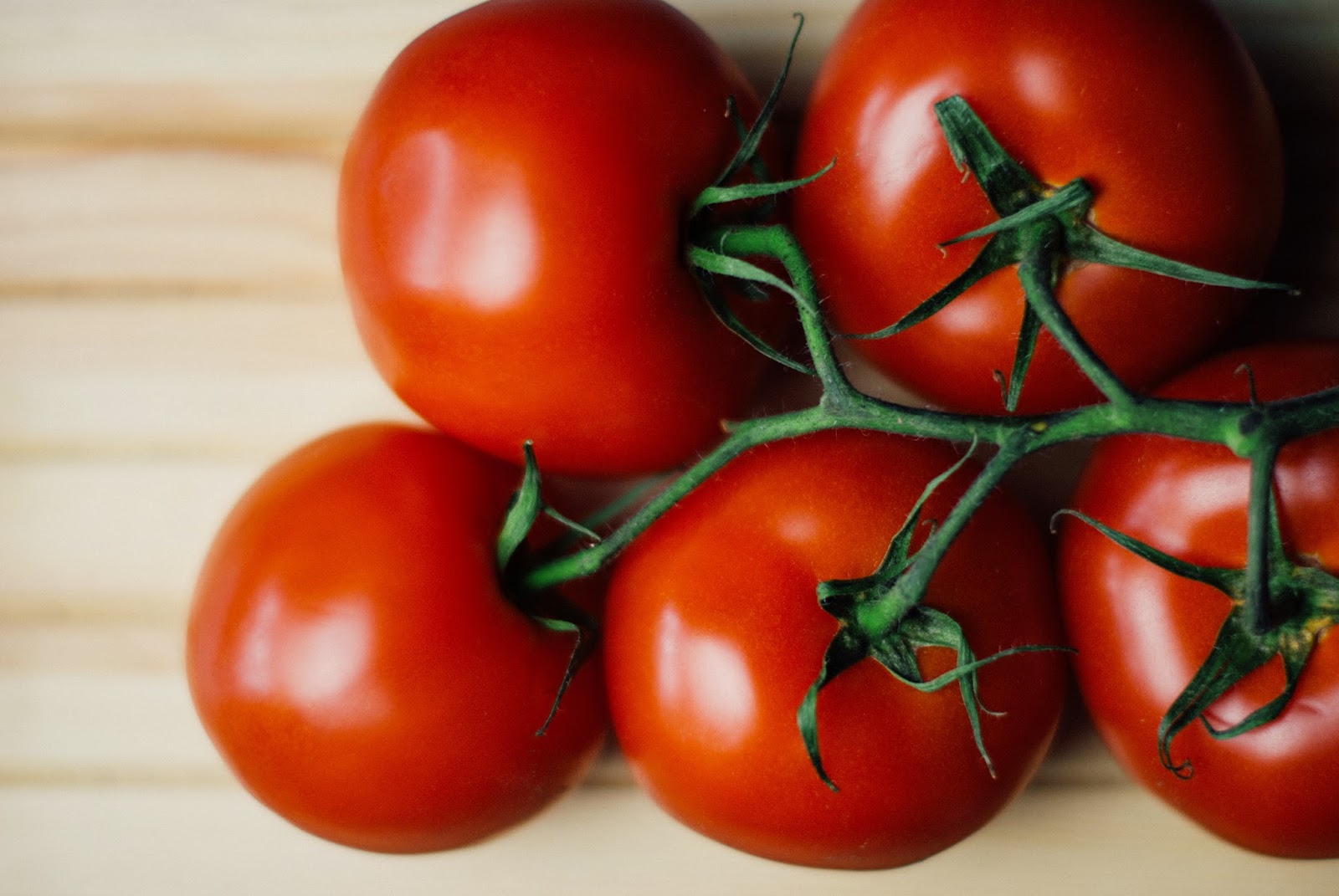
Tomatoes are one of the first vegetables I can remember growing in our garden at home when I was little. As one of the most popular veggie plants to grow in Louisiana, it can be planted in pots or gardens, and produce 5 or more pounds of edible fruit per plant. Tomatoes are packed with nutrients and antioxidants, not to mention providing a beautiful color contrast to any dish. Low in calories, tomatoes are a good source of vitamin A and C, along with folate, potassium, dietary fiber, potassium, biotin, and much more. Tomatoes provide a great option to add a vegetable to any meal of the day. Add them to a breakfast sandwich, egg scramble or omelet. Toss into salads with dark leafy greens – the vitamin C from tomatoes will help to absorb the iron provided by spinach. They make a great addition to any side dish or can be the feature of a main entrĂ©e.  Being in season during summer there is an abundance of varieties to try at local Farmer’s Markets and produce stands.  Try this fun summertime recipe:
 
Tomato -Watermelon Gazpacho with Thai Basil and Jalapeno

Servers 6, 25-minute prep, 90-minute chill
Ingredients
·         1 ½ lb large tomatoes (3 or 4), seeded and juices
·         2 ½ cups chopped seedless watermelon
·         2 cups English cucumber, peeled and diced
·         1 shallot, diced
·         1 medium jalapeno pepper, seeded and chopped (leave some seeds if heat wanted)
·         1 garlic clove, roughly chopped
·         1 Tbsp extra-virgin olive oil
·         1 Tbsp Spanish sherry vinegar
·         ½ tsp salt
·         15 basil leaves, roughly chopped (can sub some mint leaves for some basil)
·         2 Tbsp plain low-fat Greek yogurt
Directions
1.      Place tomatoes, watermelon, cucumbers, shallot, jalapeno, and garlic in a blender; add oil, vinegar, salt, basil. Blend until fairly smooth but still retaining a bit of texture (if soup is too thick, thin with ¼ cup tomato juice); chill 90 minutes or overnight 
2.      Serve garnished with yogurt and basil leaves
Nutrition (1 cup soup + 2 Tbsp garnish)
Calories: 81  Fat 4g  sodium: 201mg  Total Carb: 6g  Fiber 3g  Sugar 6g  Protein 3g
SmartPoints value: 1
Source: Weightwatchers July/August 2016 issue

Thursday, June 2, 2016

Summer at the Farmer's Market


The Summer weather has pretty much hit south Louisiana the past couple of weeks.  Hot weather and pool days are great, but fresh seasonal produce is even better. My favorite Saturday morning ritual includes a cup of coffee and a trip to the local Farmer’s Market. This is the most colorful time of year with squash of all varieties, eggplants, leafy greens, multicolored peppers, and much more. Local produce is picked at its peak ripeness – you’ll often be purchasing items harvested within the previous 24 hours. These fruits and vegetables provide the most vitamins and minerals along with the best flavor. All of the picture perfect produce available makes it easy to eat more fruits and veggies. Here are a few quick tips to navigating your local Farmer’s Market:
·    Shop early for the best selection; shop late for the best deals 
·    Bring your own bag to support substantial produce purchases
·    Have small bills ready to pay
·    Go in with a plan or recipes in mind, but still try one new item each time
·    Talk to the Farmers – they have great knowledge of how to prepare and love hearing with you do with their produce
For Baton Rouge, The Red Stick Farmer’s Market is available year round Thursdays 8:00am-12:00pm at Pennington Biomedical Research Center 6400 Perkins Road.  And Saturdays 8:00am-12:00pm at Main Street Market at 5th and Main Streets. Other seasonal markets are available throughout the year, check out their website at: http://breada.org/.