Showing posts with label registered dietitian. Show all posts

Wednesday, August 24, 2016

Do You Pack Snacks to Eat Throughout the Day?

No matter what is on my agenda for the day, my snack schedule is always taken into consideration before leaving the house. Packing snacks to bring to work is essential to ward off hunger pains that come in the mid-morning or homestretch hours between lunch and quitting time.  

Even with a weekend day full of shopping and various errands, I make sure there is always a small bite handy.  Trust me, packing a healthy snack helps avoid poor food choices that occur last minute at the peak of hunger. Healthy snacks between meals can help control hunger which would prevent you from overeating at the end of the day.  I often refer to snacks as “mini meals” because they should be just as balanced as a “regular meal” including: a carbohydrate, protein, and healthy fat.  In fact, a small portion of leftovers can often act as a good pick-me-up during the day. 

Try these packable and portable snack options:
  •  Individual bags of trail mix or nuts
  • Dry roasted edamame 
  • Whole fruit (apple, orange, banana, etc)
  • Whole grain crackers and cheese or peanut butter
  • Half of a PB&J sandwich on whole wheat bread
  • Low sodium beef jerky
  • Granola bars with fiber and protein (try to get at least 5g fiber)


For healthy snacks that require refrigeration and would be more ideal for work vs running errands:

  •            Yogurt and fresh fruit
  •            String cheese and fruit or whole grain crackers
  •            Cottage cheese with berries and nuts
  •            Hummus and vegetables – carrots, bell pepper, cucumber, celery
  •            Half a turkey sandwich – low fat cheese and whole grain bread


Just remember, keeping a snack handy during the day will keep you from binge eating later.

Wednesday, August 10, 2016

Types of Foods That Fuel Your Body When Training for a Half Marathon

There’s something about setting your sights on 13.1 miles that is exhilarating, nerve racking, yet attainable all at the same time. At least, these were some of my emotions when training for my first half marathon.  Choosing a training program was pretty easy with a little bit of research. However, figuring out what, when, and how to incorporate meals and snacks around training was a bit trickier, but nonetheless possible. Whether you’re running to finish or running for your personal best, maintaining proper nutrition can help you accomplish any goal.


While proper nutrition should be a part of your every day lifestyle, during your 10-15 weeks of training, using proper nutrition guidelines can help you excel. Optimal nutrition both before and after a run will help increase nutrient stores allowing your muscles to repair, become stronger, and increase/sustain energy production.

FYI: training for a half marathon is not the time to cut calories to lose weight because getting enough calories for your body is important during training. It's essential to eat enough during the day to avoid fatigue during your workouts. In addition to daily balanced meals, have a carbohydrate based snack before your run to maintain a source of energy. Here are some ideas of the type of foods you should be eating as well as the time you should consume them.

Pre-run foods


10-15 minutes before a run

o   Whole piece of fruit – orange, apple, grapes, etc
o   Applesauce
o   Pudding
30-60 minutes before a run
o   Cereal – try varieties with quickly absorbed carbs to avoid cramping and bloating
o   Dried dates
o   Greek yogurt with fresh berries
60-90 minutes before a run
o   Hummus and carrots or whole wheat crackers
o   Instant oatmeal – plain is best, sweeten with cinnamon and berries
o   Sweet potatoes

30-60 minute run aim to consume 150 calories
60-90 minute run aim to consume 200-250 calories
90 minute-120 minute run aim to consume 250-300 calories

I do understand that not everyone can handle solid food before a run, so if you are one of those individuals, have a sports drink.


Post run foods


Fueling up after a run is just as important as adequate intake during the day. Consuming a snack, ideally within 30 minutes of our run, helps your body replenish glucose stores. Your post run snack should consist of a 4:1 carbohydrate to protein ratio. Chose a snack similar to your pre run snack – whole grains, fruits, etc.

Approaching race day


Two weeks

As race day gets closer, about 2 weeks out, adding more complex carbs to your daily diet helps to build up glycogen stores in your muscles. Whole grain bread, whole wheat pasta, brown rice, and vegetables are a good source of complex carbs. Throughout all of your training (and when you’re not training) drinking lots of water is necessary. During long runs, drink water every 20-30 minutes, or as often as needed; especially in the Louisiana heat.

Three days

Three days before the race, your diet should be around 70% carbs. Stick with foods you are familiar with and how your body digests them. These complex carbs will provide your muscles and brain with the fuel needed to get through the race.

Night before

The night before the big day, eat a nutritious meal, continue drinking water, and don’t experiment with anything new. Dinner should consist of whole grains, veggies, and lean protein. If you found complex carbs did not sit well with you during training, having white pasta, rice, etc is okay.

Morning of race day

The morning of race day, eat a healthy breakfast consisting of 400-600 calories of something familiar. Drink water and have a cup of coffee if that’s something you’re use to – the caffeine can help.


Happy training everyone!


Friday, July 29, 2016

Thinking About Portions


Upon returning from vacation overseas in Italy and Spain, I’m still reminiscing on the delicious food and drinks enjoyed in all areas. Along with the beautiful views and cultural history, dining experiences were unforgettable. I couldn’t help but notice the difference between the food culture overseas versus here in the US. Walking along the streets in the morning, restaurants would be receiving fresh fruits and vegetables daily or shopping at the corner markets for their daily stock. Street stands and corner stores had fresh cut fruits and savory vegetable sandwiches to offer versus packaged, processed foods often sought after here. While healthy fresh foods are abundantly available here in the US, and Baton Rouge, it’s all about making the right choices when it comes down to snacking and meals. Along with more vegetable based options in Italy & Spain restaurants, the portions of foods were perfect; not too much, not too little. There were no televisions or media distractions in restaurants, the focus was the food, wine, and atmosphere. Taking more time between courses provided the ability to fully enjoy each bite and the overall experience of eating.  
Having perfect portions provided the opportunity for more mindful eating and enjoyment of several courses to appreciate the flavor profile of each. To get an idea of better portion control, especially when dining out, follow these easy tips:
·         A serving of meat should be about the size of a deck of cards
·         A serving of fat should be about the size of a ping pong ball or your thumb
·         A serving of bread should be about the size of a flat hand
·         A serving of rice or pasta should fit into a handful, about ½ cup
·         A serving of cooked veggies should be about a fist sized
·         A serving of salad or leafy greens should be about two fists together
If you have limited access to fresh produce, frozen options (with no added salt or sauces) are just as healthy as fresh and can sometimes be more convenient to store and prepare. Portion control is all about making the right choices too; just because a large portion is served at a restaurant does not mean you have to consume all in one sitting. Additionally, if serving yourself at home and you find you’re full before you have a “clean plate” save the rest for left overs – or feed them to your boyfriend. 
*Featured picture from a family owned and operated ristorante in Venice, Italy. Seared tuna with cream of pea (preceded by a delicious seafood scampi and of course a glass of red wine, not pictured)

 
Erin King, RD, LDN
 

Friday, June 24, 2016

Highway to the Danger Zone


Hearing the words “Danger Zone” generally causes a catchy tune pop into mind; many people don’t immediately think about food temperatures. With Summer officially here, pool parties, Bar-b-ques, and picnics are a weekly occurrence. One main component of all these festivities, especially down here in the south is the sharing of food. Salads, especially chicken, potato, eggs salads are good options to provide some cooler eats in the summer heat.  Grilled meats, casseroles, and pies are staples, but still need to be handled with care. “The Danger Zone” in the food world refers to the temperature range in which bacteria most rapidly grow in food. This range is between 40oF – 140oF.  At first glance, this looks like a wide range.  What to take away from this: food grows bacteria most rapidly at room temperature. To cut down on bacteria growth, refrigerate food within 2 hours of being cooked or taken out of the fridge. For food outside with weather >90oF, refrigeration should happen within 1 hour. Stored leftovers should be reheated to a safe minimum internal temperature before eating again. Food left out all day should be discarded to avoid potential food related illness. So stay food safe this Summer so you can enjoy all the parties!

Thursday, June 16, 2016

Keeping Off Pounds Lost


Weight loss is commonly tracked through the measurements of pounds and inches. In addition to these two figures, a significant number to be tracked is percent (%) of total body weight. Substantial health improvements can happen from just a 5-15% total body weight loss. Some benefits include fewer medications or lower dosages, decreased sleep apnea, improved sexual function, increased mobility/function, and more.  All of these improvements from just 10-20 pounds in some cases. Losing the pounds often proves to be the easiest part of a weight loss journey, keeping them off is where most people struggle.  Obesity expert Donna Ryan from Pennington Biomedical Research Center explains in a recent article, “estimated metabolic adaptation from weight loss is roughly about 15 calories for every percent of weight loss.” So adapting your intake to be 15 calories less with each percent loss will help to keep the pounds off. A 5% loss would warrant a 75 calorie decrease in total daily needs. To compensate for this amount, eating less or exercising more are both options. With this, it is important to note that daily smart food choices and regular physical activity are two main components of a healthy lifestyle for anyone at any size.

Friday, June 10, 2016

You Say Tomato, I Say Tomatoe

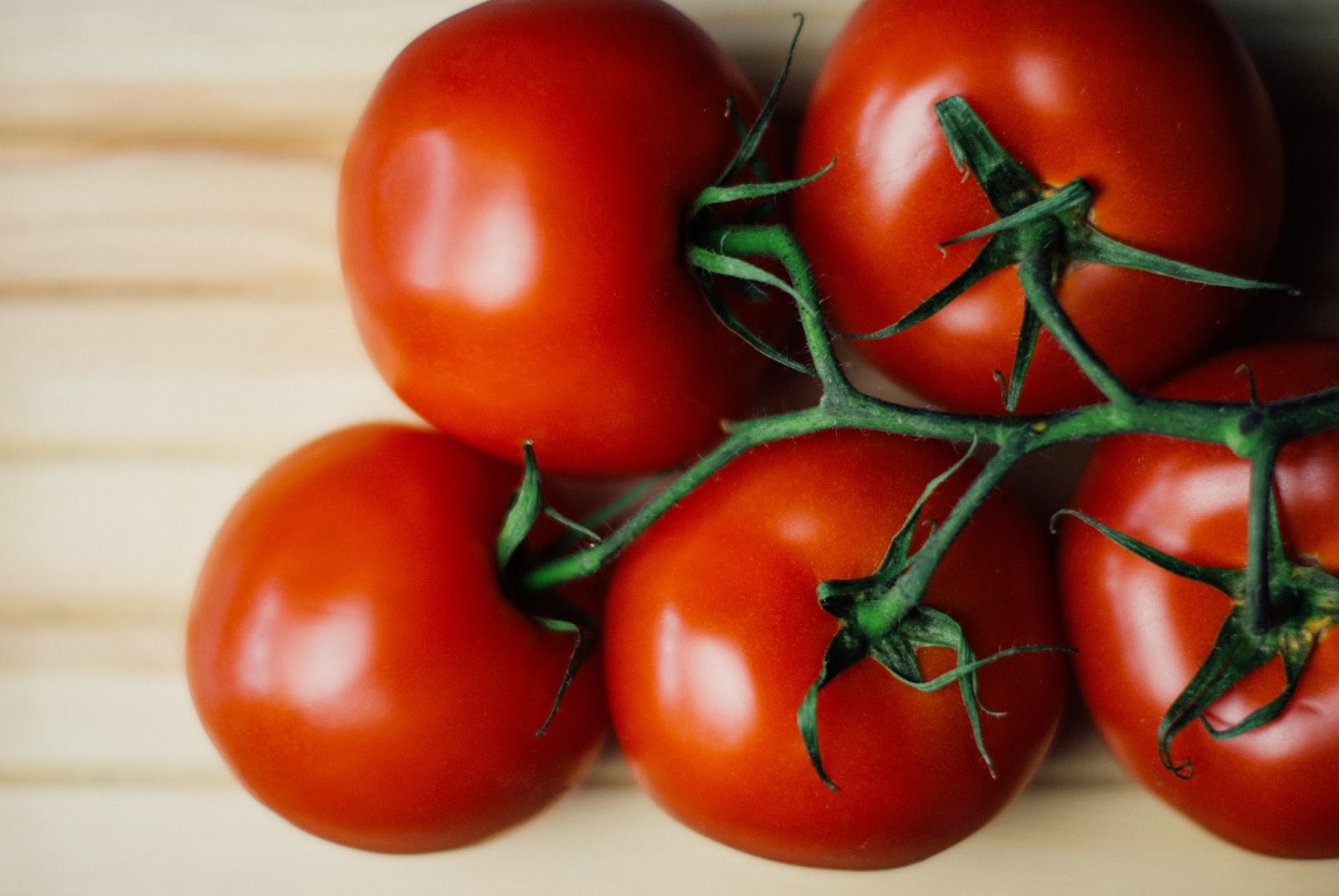
Tomatoes are one of the first vegetables I can remember growing in our garden at home when I was little. As one of the most popular veggie plants to grow in Louisiana, it can be planted in pots or gardens, and produce 5 or more pounds of edible fruit per plant. Tomatoes are packed with nutrients and antioxidants, not to mention providing a beautiful color contrast to any dish. Low in calories, tomatoes are a good source of vitamin A and C, along with folate, potassium, dietary fiber, potassium, biotin, and much more. Tomatoes provide a great option to add a vegetable to any meal of the day. Add them to a breakfast sandwich, egg scramble or omelet. Toss into salads with dark leafy greens – the vitamin C from tomatoes will help to absorb the iron provided by spinach. They make a great addition to any side dish or can be the feature of a main entrée.  Being in season during summer there is an abundance of varieties to try at local Farmer’s Markets and produce stands.  Try this fun summertime recipe:
 
Tomato -Watermelon Gazpacho with Thai Basil and Jalapeno

Servers 6, 25-minute prep, 90-minute chill
Ingredients
·         1 ½ lb large tomatoes (3 or 4), seeded and juices
·         2 ½ cups chopped seedless watermelon
·         2 cups English cucumber, peeled and diced
·         1 shallot, diced
·         1 medium jalapeno pepper, seeded and chopped (leave some seeds if heat wanted)
·         1 garlic clove, roughly chopped
·         1 Tbsp extra-virgin olive oil
·         1 Tbsp Spanish sherry vinegar
·         ½ tsp salt
·         15 basil leaves, roughly chopped (can sub some mint leaves for some basil)
·         2 Tbsp plain low-fat Greek yogurt
Directions
1.      Place tomatoes, watermelon, cucumbers, shallot, jalapeno, and garlic in a blender; add oil, vinegar, salt, basil. Blend until fairly smooth but still retaining a bit of texture (if soup is too thick, thin with ¼ cup tomato juice); chill 90 minutes or overnight 
2.      Serve garnished with yogurt and basil leaves
Nutrition (1 cup soup + 2 Tbsp garnish)
Calories: 81  Fat 4g  sodium: 201mg  Total Carb: 6g  Fiber 3g  Sugar 6g  Protein 3g
SmartPoints value: 1
Source: Weightwatchers July/August 2016 issue

Tuesday, May 24, 2016

Check Out the New Food Label Changes!


Check out the new food label approved by the FDA.  While keeping the iconic nutrition label look, font sizes are increased for calories, servings per container, and serving size. Additionally, “calories” and “serving size” fonts will be bolded.  On the footnote, % Daily Values (% DV) will have an actual amount in addition to the % value to help consumers understand this nutrition info in the context of total daily intake. Also on the foot note, Vitamin D and potassium are now required to appear along with calcium and iron; vitamins A and C no longer required, but may be voluntarily provided. “Calories from fat” is being removed secondary to research showing type of fat is more important that the amount. It is important to note serving sizes are based on amounts of food and beverages people actually consume, not the amount they should be consuming. Packaged foods with between 1-2 servings are now required to be labeled as one serving because people typically consume the entire package in one sitting.  Larger packages will have two columns of nutrient info – one for “per serving” and one for “per package”.  And my personal favorite update to take place: a line for “added sugars” will be un the total sugar as part of the carbohydrate breakdown. Changes are set to made by July 26, 2018 (manufactures with <$10 million in sales will have an additional year to comply).
                                                         Old                                                New       

Thursday, May 19, 2016

The Dirty Dozen & Clean 15

Ever wondered if buying organic really is worth it? The slight price increase at most places makes the decision easy not to. Well the Environmental Working Group (EWG) has made the decision easier for us all. Of the nearly 7,000 produce samples tested by the USDA in 2014, 75% contained pesticide residues (on the final edible portion after washing, peeling, etc).  In order to help people choose organic without breaking the bank, the EWG has compiled a list of the fruits and vegetables that test the lowest and highest for pesticide residues.  Produce with the highest pesticide load is dubbed the “Dirty Dozen”. When buying produce from this list, choose organic if available. The produce least likely to hold on to pesticide residue has earned the name of “Clean Fifteen”.  For this list, it’s okay to choose conventionally grown instead of organic.  As always, though, it is important to wash any produces before consuming. The EWG retest produces and updates the list yearly. Check them out for 2016:

       The Dirty Dozen
       1.      Strawberries
       2.      Apples
       3.      Nectarines
       4.      Peaches
       5.      Celery
       6.      Grapes
       7.      Cherries
       8.      Spinach
       9.      Tomatoes
       10.  Sweet bell peppers
       11.  Cherry tomatoes
       12.  Cucumbers

       The Clean 15
       1.      Avocados
       2.      Sweet corn
       3.      Pineapples
       4.      Cabbage
       5.      Sweet peas (frozen)
       6.      Onions
       7.      Asparagus
       8.      Mangos
       9.      Papayas
       10.  Kiwi
       11.  Eggplant
       12.  Grapefruit
       13.  Cantaloupe (domestic)
       14.  Cauliflowers
       15.   Honeydew melon

Save the Date: Open House and Nutrition Seminar

Hey guys, save the date for this upcoming Open House and Nutrition Seminar: 
Learn from our Registered Dietitian and Personal Trainer.
FREE BMI Screenings & Door Prizes
Tour the new wellness gym. 
RSVP TODAY!


Wednesday, May 4, 2016

Grocery shopping with a Dietitian

http://myemail.constantcontact.com/Have-you-ever-wondered-what-a-Dietitian-eats--.html?soid=1102593834322&aid=Pl9J43Iww00


Grocery Store Tour  with a Registered Dietitian 

Learn how to shop healthy with a Dietitian:
  • How to navigate food labels & ingredient lists
  • Decode health claims on packaging 
  • Optimize your grocery list
  child_buying_fruit.jpg
Offering two dates:
May 18th 6:30 PM Target on Siegen Lane
May 19th 12:00 PM Target on Siegen Lane 

$10 per person. Space is limited. 
(225-767-4440 or ErinK@dutchpt.com)
Erin King, RD, LDN will guide you through the aisle of the grocery store offering tips and educating you on how to read labels and identify what items are actually healthy so that you can make the best choices for you and your family. 
www.DPTHealthManagement.com | www.DutchPT.com

Friday, April 29, 2016

Inflammation & Diet

Inflammation occurs naturally in our bodies as a part of the healing process, as well as during infections and some immunologic responses.  This an acute type of inflammation that occurs to heal damaged tissue.  A chronic type of inflammation can occur also; this does not allow the body to heal.  This type of inflammation can be caused by rheumatoid arthritis, diverticulosis, Chron’s disease, some kidney diseases, chronic skin problems, cardiovascular disease.  Studies have linked certain foods and diets to assist with managing symptoms of chronic inflammation. Along with helping to reduce chronic inflammation, there is a magnitude of other benefits:
  • · Lower blood pressure
  • · Protect against cancer & stroke
  • · Benefit for all joints
  • · Aid in heart health
  • · Weight loss
Anti-inflammatory eating includes a variety of colorful foods.  Aim to include a much fresh food as possible, an abundance of fruits and vegetables while minimizing processed and fast foods.  Foods to target should be rich in antioxidants, fiber, and omega 3 fats.


Enjoy more:
  • Fish 
  • Nuts & seeds 
  • Fruits & vegetables 
  • Olive oil 
  • Beans 
  • Whole grains 
Avoid more:
  • Trans fats 
  •  Partially hydrogenated oils 
  • Foods with long shelf lives 
  • Simple carbs 
  •  Chips, crackers 
  •  Processed packaged foods 
  • Artificial flavors and colors

Want more information? Contact our Registered Dietitian, Erin King, for a free consultation to learn more about how you can help to reduce inflammation through healthy eating.

(And don't forget, we are currently offering 30% off all nutrition services thru 5/13/2016)
www.dpthealthmanagement.com